Wednesday, August 10, 2016

Love and Logic Tip #2 - Delivering Effective Consequences


When I was a kid I loved the movie The Parent Trap.  Not the 1998 Linsday Lohan version, the original from 1961 starring Hayley Mills.

If you aren't familiar with the movie, it is about twins who are separated at birth when their parents decide to divorce, and are therefore unaware of each other's existence.  Hayley Mills plays both twins, who happen to attend the same summer camp.  The fact that they look alike creates an automatic dislike of one another.  Following an escalating series of pranks, it ends in a disastrous school dance where mayhem ensues after one twin cuts off the back of the other twin's skirt.  They wreck the entire dance hall as they fight, and the camp director ends up covered in cake.

The next day the camp director, Miss Inch, contemplates what to do with both girls.  She then muses "Let the punishment fit the crime."
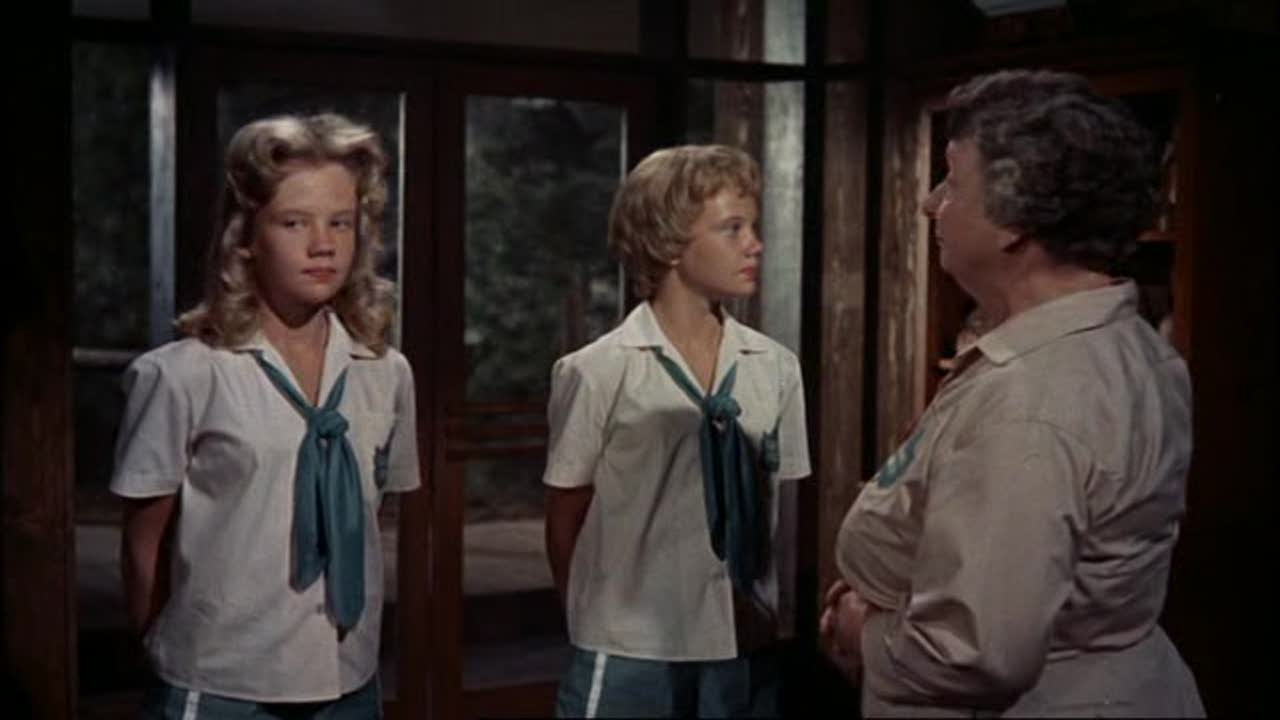
Hayley Mills and Ruth McDevitt in Disney's 1961 movie, The Parent Trap

Thus, both girls end up in solitary confinement, spending all of their time together, just the two of them.  Eventually they discover they are twins, and then set about reuniting their parents.  And because this is a Disney movie, of course, they all live happily ever after.

I have always marveled at the brilliance of Miss Inch's punishment.  She determines that if the crime is fighting with one another, then the punishment should be spending time together.  In fact, she tells them that they'll end up punishing each other far better than she ever could.

While this probably wouldn't work in a lot of situations, it does have a point - consequences should not be meaningless, or arbitrary.  There should be a reason for the consequence that is directly related to the infraction.  In the adult world, consequences are naturally occurring things.  If I speed, the officer doesn't hold me in from recess for 5 minutes (if only).  If someone overdraws on their bank account, the bank doesn't change their color on a clip chart.

One of the things I liked most about Love and Logic was the idea of delivering an effective consequence.  There are a few parts to this strategy.

First, the consequence needs to be delivered with empathy.  This was hard for me at first, but it makes total sense.  According to Love and Logic, if you begin your delivery with an empathetic statement:
1) the child is not distracted by the adult's anger
2) the child must "own" his or her pain - no blame games here!
3) the child is less likely to seek revenge (it's hard to be angry with someone who feels bad for you)
4) the adult is seen as being able to handle problems with kids without breaking a sweat

Empathetic statements should be very simple.  Some of the most popular include:
"Bummer..."
"This is so sad..."
"Oh man, this is hard..."

It's super important that your delivery of these statements be free from sarcasm!  Kids know the difference!

You then follow this empathetic response with a delivery of the consequence.

Before I talk about logical consequences, let me first say that I had a HUGE aha moment when listening to the Teaching with Love and Logic audio series.

Consequences do NOT have to be immediate.

I feel like we're trained in "teaching school" that we need to handle bad behavior as soon as it happens, meaning we need to deliver a punishment right away.  Although we do need to address the behavior, that doesn't mean automatic delivery of a consequence.  If you think about it, serious infractions in the adult world are rarely punished immediately.  It someone commits a serious crime, their sentence takes weeks, even months to be delivered.

Sometimes when a child makes a poor choice, I can't come up with a logical consequence right off the top of my head, particularly if I'm emotional.  The Love and Logic program says to use this statement:

"Oh man, this is so sad.  I'm going to have to do something about this, but I don't know what that is yet.  I'll think about it and let you know tomorrow.  Try not to worry about it."

When I have used this statement, I have found that some kids literally don't sweat it until I bring it up again the next day when I get the look of "Oh snap!  She remembered!"  But some do fret about it, and bring it up first thing the next morning.  Kids should always be doing more of the thinking about their behavior than we do.

Logical consequences should be as natural as possible.  After all, that's what we're really trying to accomplish, preparation for the real world.  After going through the Love and Logic program, I ditched the color changing clip chart.  Way too abstract and not at all practical.

Instead, in the classroom I started using consequence slips.  They were half sheets of paper with the following questions on them:
"What problem did you create?"
"What proactive choice could you have made?"
"What is your consequence for not solving the problem?"

The students had to fill these out, with my guidance, and then sign them.  I added my signature, and then they were sent home for a parent signature, with the promise that if the slips were not returned the next day, I would be contacting parents to make sure they saw the slip.  Click on the picture below for a copy of the slips I use!


I LOVED, LOVED, LOVED these slips!!  They were pretty powerful, a great reflection tool and a good way to have a calm conversation about the behavior.  I also liked have a written record of what we talked about.

Here's how I used them.  When a child is causing a problem, I use the phrase "Uh oh...", which serves as a warning to them that what they are doing is creating a problem for someone in the room.  I ask them what they think will happen if they continue with that behavior.  This is another brilliant Love and Logic technique.  The program creators point out that kids will usually name the first consequence that pops into their head that they dread the most.  Which is a great way to figure out what will be most effective for that child!  After the child names a possible consequence, I follow up with, "That's a possibility.  So please solve the problem, or I will have to do something about it."

When it happens again, I say this: "Bummer, this is sad.  We will talk about this at the end of the day.  Until then, please come sit at my table so that you aren't causing any other problems for the rest of us."  I then write the child's name on a consequence slip and leave it on my table, so that I remember we need to fill it out at the end of the day.

During our pack up time, I then guide the child through filling out a slip.  And yes, there have been times I have a table full of kids needing to fill those slips out.  When we get to the last question, I ask them what they think their consequence should be.  If the child names a consequence that I think is both logical and appropriate, he or she writes it down and we sign the slip.  If the child doesn't come up with a consequence that I think "fits the crime", or can't think of one, I then offer some possibilities.  Click on the chart below for a list of some logical consequences to use in school.


At home, I don't use consequence slips, but I do have the same conversation.  What problem did you create, what would have been a better choice, what do you think should happen now?  The girls have gotten pretty good at coming up with logical consequences, since they now understand that, as the camp director from The Parent Trap so aptly put it, the punishment should fit the crime.  Click on the chart below for a list of some logical consequences to use at home.


One note: Please use your adult discretion with a strategy like this.  If a child is putting the safety of someone else at risk, I do not wait to address it until the end of the day.  Children's safety should always be top priority, and dangerous behavior needs to be handled immediately.

So what do you do if you just can't come up with a logical consequence?

You have...drumroll please...

an ENERGY DRAIN!!!

The energy drain is one of my absolute favorite Love and Logic techniques, and I can't wait to share it with you in my next post!

Until next time,
See ya real soon!
Allison


Tuesday, August 2, 2016

Love and Logic Tip #1 - Enforceable Statements


I grew up on a steady diet of Peanuts.  The comic strip, not the food.  I enjoyed reading the cartoon in the newspaper, but I especially loved the TV specials.  The animation, the music, and especially the characters all appealed to me.  I could identify with having to take part in a Christmas pageant, going trick-or-treating, dealing with an annoying little brother, and having a dog with a mind of its own.

One of my favorite parts of the comic was the teacher, whose endless "wah-wah-wahhhhhh" was something every kid has experienced at some point when listening to an adult.  When I became a teacher, I hoped and prayed that my students would never hear that trumpet voice in their head and be as bored as poor Peppermint Patty, with their head slumped backwards on a classmate's desk.

But despite my best efforts, I'm sure at times that's what I've sounded like to both students and my own three children.  In fact, that's probably what kids hear most of the time when an adult starts to command and demand.

"Clean your room!"
"Stop talking!"
"Leave your sister alone!"
"Do your homework!"
"Stop fighting!"
"Eat your dinner!"
"Stop licking your eraser!"

Translation: WAHHHH-wah-wah-WAH-WAHHHHH

The truth is that, although we would like to think otherwise, we can't actually make kids do these things, unless we use physical force.  We can deliver consequences for disobeying a direct command, but that doesn't mean they will end up doing what it was we even wanted from them in the first place.

Enforceable statements allow adults to set limits that they can control.  For example, when K eats a measly two bites of her dinner, and then wants to know if she will be allowed to have a bedtime snack, I have a few options.  I can say "no", which to a three year old is the worst word in the world and usually produces a tantrum.  Or I can tell her to take a certain number of bites before she can be done, which usually ends with whining, tears, and a very dramatic display of counting bites.  Now this does get results, but they aren't exactly enjoyable, and we all are made to suffer along with her.  Because at this point, the only part of the situation that K has control over is her reaction.

Or, I can use the following statement: "I give bedtime snacks to kids who eat their dinner."  Why does that work?  It works because I set a limit that I can control and enforce.  I just told her what I will do as a result of her behavior.  If she eats, I'll give her a snack, if she doesn't, I won't.  Therefore, she maintains some control, because she gets to make the decision, knowing full well what the outcome will be.

The beauty of an enforceable statement is that you lay it all out there for the child.  I will do A when you do B.  I will do C when you do D.  Then they know exactly what to expect, and can decide their next course of action.  And this statement is something that you can enforce.  You're not making an idle threat, or trying to impose your will on them.  You are simply stating what you will do as a direct result of what they do.

This might sound silly, but it works.  90% of the time when I use this strategy, I get the results I'd hoped for, without anyone losing their temper.

Now it takes some practice, because it's pretty much the exact opposite of how most people were parented/taught and how we ourselves now parent/teach.  Since this type of discipline is not exactly instinctive, and, as I said, requires some practice, I've put together a list of possible situations both at home and at school where enforceable statement will be most effective.  For each situation, I've given an example of an enforceable statement that could be used.  The formula for this is pretty simple: I will _____ when you _____.  Or, Feel free to _____ when you _____.  Click on the picture below, or this link, to get your free download!


Here is a golden nugget that I use when a child starts arguing: "I love you too much to argue."  Kids are experts in the fine art of arguing. I'm pretty sure they are handed a manual at birth when we're not looking.  If you refuse to get sucked into the argument, it ends pretty quickly.  You just repeat that same statement over, and over, as many times as you need to.  This drives M absolutely NUTS!  When she says "Mom! STOP saying that!" I know I've broken her down and ended the argument.  This works in the classroom too, except I tweak it and say "I don't argue with third graders."  I don't have to use it very often, but when I do, it does the trick!

So what do you do the other 10% of the time when enforceable statements won't do the trick?  In my next post, I will share with you what I've learned from the Love and Logic program about delivering effective consequences.

Until next time!
See ya real soon!

Allison

Friday, July 29, 2016

How Love and Logic Saved My Sanity


Every once in a while, God throws a situation our way that is meant to test us.  It is one of those situations that is the subject of this post.  Please bear with me, as this one is a little lengthy.  But I want to share with you my journey, not just the destination.

This past school year, I had a class that challenged me in every way possible, like no other class had in the previous nine years of my teaching career.  I won’t dive into details, but let’s just say that by December, I had tried every behavior management tool I could find.  I had tapped into books, websites, colleagues, hoping that I could find that one thing that just might save my sanity.

You see, a very large chunk of my family heritage is German.  And it is a well known fact that Germans are stereotyped as being stubborn.  I have heard this phrase so many times over the course of my 34 years of life that I've just accepted it as truth.  

And so, I believe it was my German “stubbornness” that prevented me from giving up on finding a solution to my challenge.  Let's call it stubbornly persistent.  I refused to give up.  God would not have placed me in this situation without a reason.  I knew without a doubt there was something I was meant to learn from this.

At this same time I was also fighting battles on the home front.  M was struggling with reading, and there was a lot of frustration and tears at night when we tried to work with her.  As a teacher-mom, it was KILLING ME that she was having such a difficult time learning to read.

She had also developed an attitude.  Have you ever seen the movie 13 Going On 30?  Yeah, that was our house, except it was 5 Going On 15.  There was a lot of sass, drama, and stubbornness.  Like mother, like daughter.

I was losing my battles, and certainly not winning the war.  I was like General Lee at the end of the Civil War, trying to figure out what went wrong.  I mean, he was the best general in the country, and he LOST THE WAR.  Now I do not claim to be the best teacher in the country, or mother-of-the-year.  But I do believe I am resourceful.  And that resourcefulness led me to someone who would save my sanity with one suggestion.

It was no coincidence that my OCD had begun spiraling out of control.  In fact, I had a full-blow anxiety attack on Christmas Day.  So when we returned to school in January I asked our school guidance counselor for some recommendations for private counseling, and she gave me a few names.  I chose the one she said worked well with both adults and children, as I suspected M was headed down the OCD path as well.

After a few sessions with my counselor I knew she was the right person.  Because of her I now feel educated about my disorder, am equipped to handle the daily barrage of obsessive thoughts and compulsive actions, and I’m confident that the right person is counseling my child.

It was during one of my counseling sessions that I mentioned the challenges at home and at school.  My therapist’s secret weapon?  Love and Logic.

She explained that it would help me understand how to deal with discipline in a way that was both loving and logical.  It would allow both myself and the kids in my life to maintain our dignity in those types of situations.

At this point I had nothing to lose, so I bought an audio copy of the book Teaching with Love and Logic.  I have a half hour commute both ways, so listening to an audiobook is a perfect way for me to get some reading accomplished.  The morning that I listened to the first half hour of the book, I decided to try implementing one of the techniques that the Love and Logic program emphasizes – enforceable statements.  Instead of telling a child what will happen to them if they do or don’t do something (in other words, threatening, commanding, demanding), you tell them what YOU will do instead.  For example, instead of requesting over and over again for children to listen, you are supposed to say “I will only teach/talk when it’s quiet.”

Now I went into this thinking, “There is no way this is going to work.  If I tell them I will only teach when it’s quiet, that will give them an even bigger incentive to talk.”  So the first time I tried using that statement, I was blown away when the students all became quiet and gave me their attention.

It. Was. A. Miracle!!!

So the rest of the day went something like this:
“I will read when it’s quiet and everyone has their hands to themselves.”
“I will be happy to send you to lunch once everyone is in a straight line and not talking.”
“I will dismiss you once the floor is picked up and I see no trash lying around.”
“I only help students who are in their seat with their hand raised.”

And it worked.  It worked because I could enforce those statements.  They were not idle words of caution, or commands.  I was simply telling them what I would or would not do based upon their chosen behavior. 

After that, I was hooked.  I listened to the rest of the CD, and as I methodically began implementing the strategies from the program, I noticed a difference in my classroom.  I was doing more teaching and less disciplining.  Students were visiting the principal’s office a lot less because behaviors weren’t getting out of control.  I was going home at night happier, and more relaxed.  And I no longer felt like a failure.


With the raging success of using this in my classroom, I then moved on to the audio series Love and Logic Magic for Early Childhood.  It said it was practical parenting for birth to six years.  Bingo!


Thus began a radical overhaul of the way I handled the children I brought in to this world.  There was a lot more resistance from my own offspring.  But I stuck to my guns (remember, I’m stubbornly persistent) and eventually I found that I was happier, less stressed, and engaging in far fewer battles.  

From that point I never looked back.  I purchased so many Love and Logic products, most of them audiobooks, that I really should have purchased stock in the company.  It worked so well that I even convinced my husband to listen to the CDs so that we would be on the same parenting page.

Okay, I’ve said that this program is amazing, wonderful, fantastic, blah, blah, blah.  But I’ve been pretty vague on the specifics.  There are two reasons for that.  First, I wanted to testify how life changing this implementation was for me.  Second, there are a lot of techniques involved in the Love and Logic program, too many to write about in one blog post.  So I’m going to do a Love and Logic mini-series, and share with you some of the strategies that have worked the best for me both at home and at school.  Topics I plan on covering include:

*The Art of Enforceable Statements
*Delivering Effective Consequences
*Have An Energy Drain (my favorite!!!)
*Sharing Control
*Taming the Angry Beast
*Teaching Kids to Solve Their Own Problems
*Building Self-Concept

If you are interested in learning more about the program from the minds behind it, I encourage you to visit the Love and Logic website for more information.

See you real soon!

Allison

Tuesday, July 26, 2016

Essential Oils - A Love Affair


Oh essential oils.  How I love thee.

Here’s some irony for you.
A year ago, I thought essential oils were complete hokum.  I mean really, I can rub some sort of weird smelling oil on me and poof, headache gone?  Anxiety quelled?  Nausea eased?

Complete.  Hokum.

And then I moved to a new school building.  And I found out something painful - I was wrong.

Most of the teachers I work with are, as one put it, “all oiled up.”  It didn’t take long before I started asking things like, “Hey, is there an oil that would help with my allergies?”  Or, “Are there any oils that could help control my OCD?”

The next thing you know, I’m a doTERRA wellness advocate, I have a plethora of DIY recipes, and enough homemade oil concoction supplies (glass bottles, jars, labels, carrier oils, shea butter, cocoa butter, etc.) to open up my own health and wellness store.

In fact, just last week, the girls and I made our own diffuser bracelets with elastic string, colorful beads, and lava (volcanic) beads that I bought half off at Hobby Lobby.


Since M and I both have OCD, we need something that we can keep on us when we are away from home to diffuse relaxation oils.  Direct application to skin is awesome, but the oil and smell is quickly absorbed, and sometimes all I need is a whiff to give me the instant calm down my overworked brain is craving.

Towards the end of last school year, I started diffusing oils in my classroom for various purposes – germ-busting, focusing, calming, energizing, and so on, avoiding smells that students didn’t like.  But I also had a student who began using one of doTERRA’s products, In Tune to help with ADHD symptoms.  With parent permission, the student used it twice a day, in the morning, and right after lunch.  The adults who worked with this child (including the parent) could tell a difference.  There were less distractible moments, fewer angry outbursts, a calmer demeanor - the change was noticeable.

Since my collection of oils has literally tripled over the summer, I’m excited to find new ways to use them in my room, without directly applying them to my students.  Here are some of my favorite doTERRA oils that I diffused last year:
*Balance - helps promote a calm atmosphere
*Peppermint - provides focus, especially useful during testing
*Wild Orange - gives uplifted, energized feelings (great on Mondays)
*Serenity - calms emotions, provides relaxation
*Lemon - promotes a positive mood
*On Guard - supports a healthy immune system

And no EO teacher collection is complete without Past Tense and Deep Blue rub.  Perfect for those rare occasions when you experience muscle tension, especially in the shoulders, neck and head.

What about you?  Do you use essential oils in the classroom?  Are you interested in learning more about specific oils that both you and your class could benefit from?  What is your school policy (if any) on using EOs in the classroom?  Or are you like I was a year ago, and believe this is all complete hokum?

See ya soon!

Allison